Deliverables will be made available here for download once they have been accepted by the European Commission.
WP1: Stakeholder Dialog and Project Co-Design
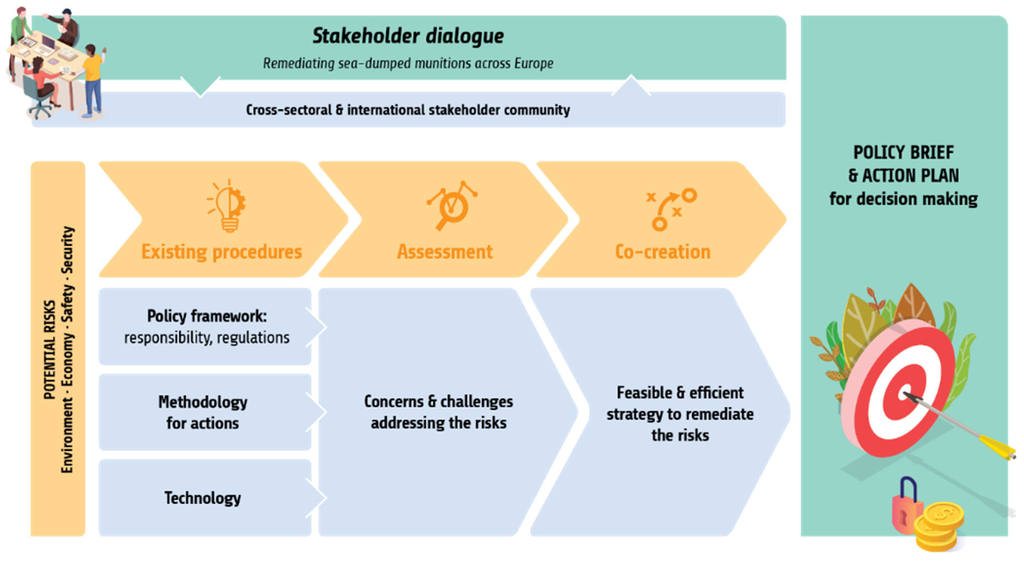
D1.1 Stakeholder community (Report available)
🗎Identification and enrollment of stakeholders (Lead Partner: HELCOM)
Contents
- Introduction
- Methodology
- Stakeholder community: Groups & Expectations
- Stakeholder engagement approach
- Stakeholder personal data protection
- Results
- Current roster of stakeholders, February 2026
- Discussion
- Conclusions
- Supplementary material
D1.2 Identified needs (Report available)
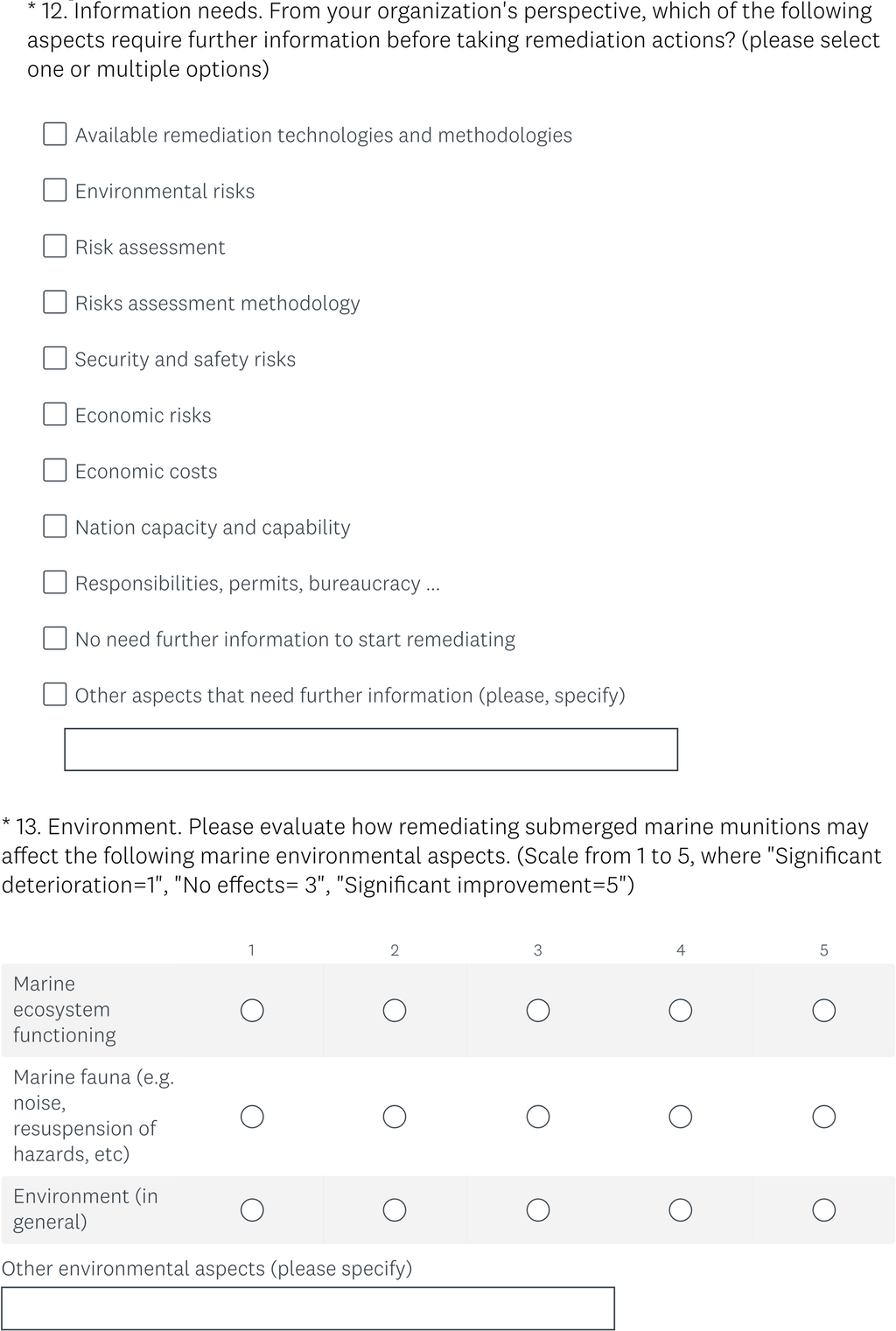
🗎First needs and requirements for stakeholders are identified (Lead Partner: AU)
Contents
- Introduction
- Materials and Methods
- Survey Area
- Stakeholders Identification and Selection
- Survey Design
- Data Collection and Analysis
- Results
- Profile of respondents
- Impacts of dumped marine munitions on the environment, economy, security and safety
- Remediation of submerged munitions
- Aspects requiring further information
- Impacts of remediation on the Environment, Economy and Security
- Need for remediation actions
- Remediation approaches and methods
- Discussion
- Conclusions
- References
- Appendices
- Questionnaire
- Concerns of the Presence of Munitions in the Sea
- Additional Information for Remediation
- Other Considerations for Remediation Activities
- Methods for Remediation
D1.3 Synthesis of findings
Synthesis report of stakeholder discussion outcomes (Lead Partner: HELCOM)
WP2: Responsibilities, assessment and decision-making
D2.1 Responsibilities
Synthesis report on responsibilities(Lead Partner: HELCOM)
D2.2 Assessment of security risks
Synthesis report security(Lead Partner: BPol)
D2.3 Risk assessment & decision
Synthesis report decision making(Lead Partner: AU)
WP3: Seafloor munition detection and identification
D3.2 Optical observation & reconstruction
Final compilation of optical observations and reconstruction(Lead Partner: GEOMAR)
WP4: Subseafloor munition detection and classification
D4.1 Buried UXOs maps
Mapping of areas where burial is impossible, possible or probable(Lead Partner: SHOM)
D4.2 Magnetic inversion
Mapping of areas where burial is impossible, possible or probable(Lead Partner: VLIZ)
D4.3 Electromagnetic methods
Report on state of the art and results from real campaigns(Lead Partner: SeaTerra)
D4.4 3D-SBP strategies
Report on comparison of the different 3D-SBP strategies(Lead Partner: VLIZ)
WP5: Secure data management & automated munition detection/classification/identification
D5.1 Data Management Plan (Report available)
🗎Data Management plan of field and outreach data (Lead Partner: north.io)
Contents
- Introduction
- Data summary
- FAIR Data
- Making data findable, including provisions for metadata
- Making data accessible
- Making data interoperable
- Increase data re-use
- Data Security
- Ethical aspects
- Other issues
D5.4 AI approaches compiled (Report available)
🗎Landscape the existing AI approaches for munition detection (Lead Partner: RMA)
Contents
- Executive summary
- Introduction
- Existing AI approaches for munition detection
- Spatial hydroacoustic approaches
- Traditional and unsupervised signal processing
- One-stage detectors
- Two-stage detectors
- Acoustic camera approaches
- Optical camera approaches
- Spatial hydroacoustic approaches
- Conclusions
- References
D5.7 AI on photogrammetric data
Report on workflow for object identification in photogrammetric data(Lead Partner: CNR)
D5.8 Summary on data and AI
Final assessment of sharing data, AI approaches and models (summary of D5.4 to D5.7)(Lead Partner: RMA)
WP6: Smart and cooperative applications for autonomous and remotely controlled vehicles
D6.2 Magnetics on AUVs (Report available)
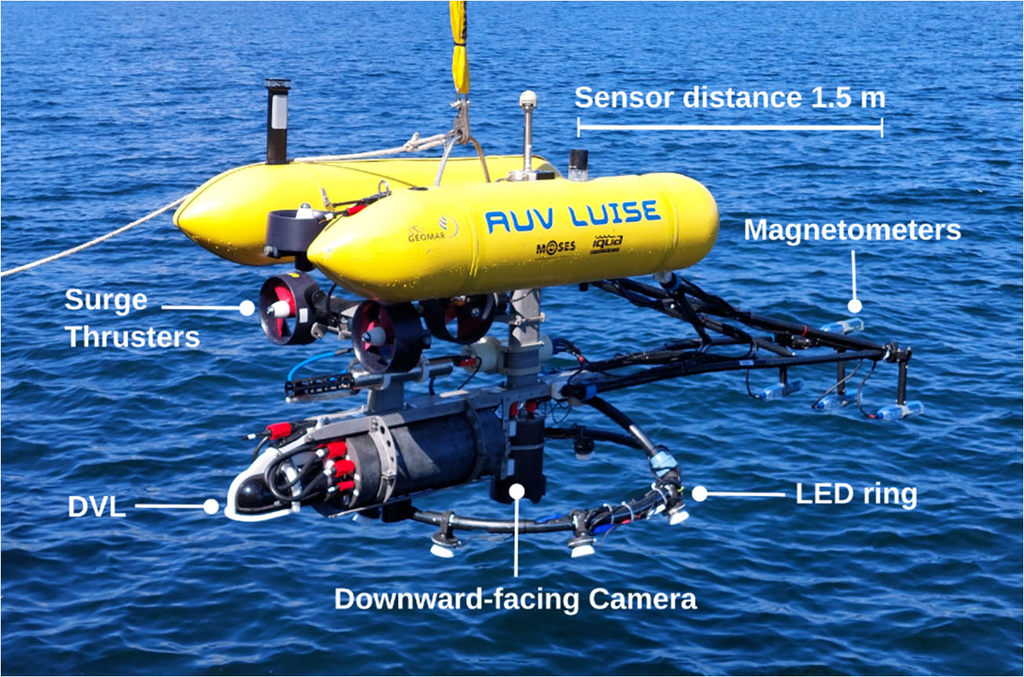
🗎Magnetic processing on AUVs based on SAM project (Lead Partner: GEOMAR)
Contents
- Introduction
- The Magnetic Method
- AUVs
- General Remarks
- AUV-Based Magnetics
- AUV-Related Magnetic Noise
- Integration Examples
- Girona 500 AUV with Fluxgate Magnetometers
- NemoSens AUV with one Fluxgate Magnetometer
- Iver2 AUV with an Overhauser Magnetometer
- ROV-Based Electromagnetics
- Data Processing
- General Magnetic Processing
- Magnetic Processing on a Girona 500 AUV
- Smart AUVs
- Conclusions
- References
WP7: Munition removal by grabbing
D7.1 Mission Control
Report on software and projects; requirements of new tool architecture and functions(Lead Partner: SeaTerra)
WP8: Environmental monitoring of chemical contamination using sensor systems
D8.1 Environmental risk review (Report available)
🗎Compilation of knowledge on environmental munition contamination (MC & CWA) (Lead Partner: AU)
Contents
- Introduction
- Materials and Methods
- MCs
- CWAs
- Literature Search - CWAs
- Inclusion and Exclusion Criteria-CWAs
- Selection and Quality Assessment
- Extraction and Harmonisation
- Results
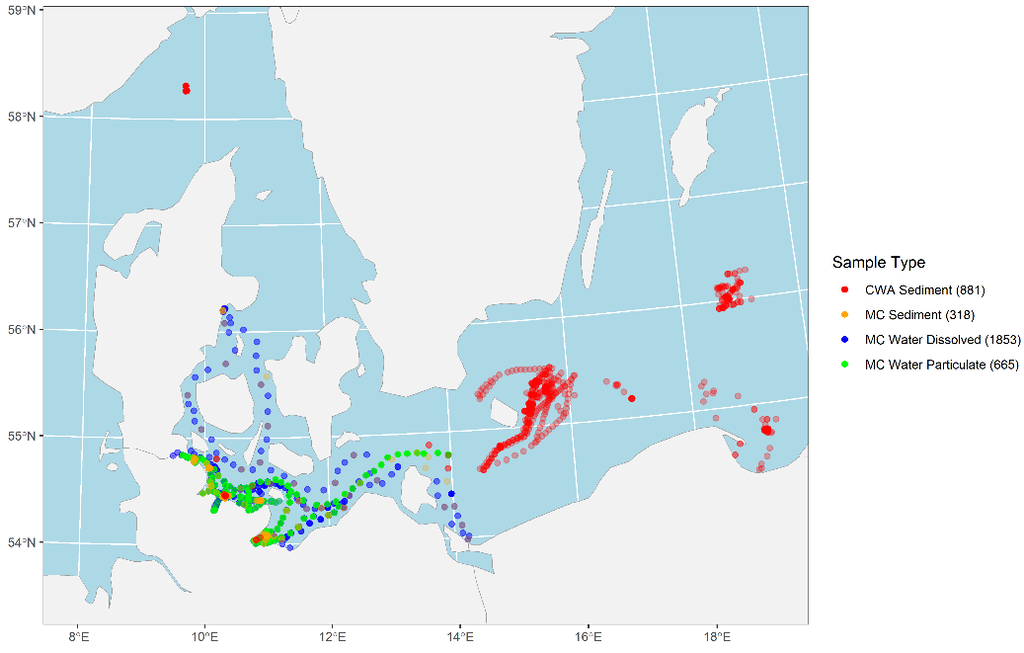
- Study Areas and Sample Counts
- Measured Environmental Concentrations of MCs and CWAs
- MC Concentration in Sediments
- MC Concentrations in Water (Dissolved and Particulate)
- Measured CWA Concentrations in Sediments
- Regulatory and Toxicity Values for MCs and CWAs
- MC Regulatory Relevant values
- MC Toxicity Values
- CWA Regulatory Relevant Values
- CWA Toxicity Values
- Discussion
- Conclusions
- References
D8.2 Baseline EU chemical measurements
Expand upon existing data to support risk assessment by making new measurements of MC chemical levels in EU waters(Lead Partner: GEOMAR)
D8.3 Explosives analysis technologies (Report available)
🗎Review of available technologies for monitoring explosive compounds (Lead Partner: GEOMAR)
Contents
- Introduction
- The EU context
- Existing methods for munition search and clearance
- Field methods for chemical detection
- Critical characteristics
- Existing technologies
- Immunosensors
- Amplifying Fluorescent Polymers
- Electrochemical Detection
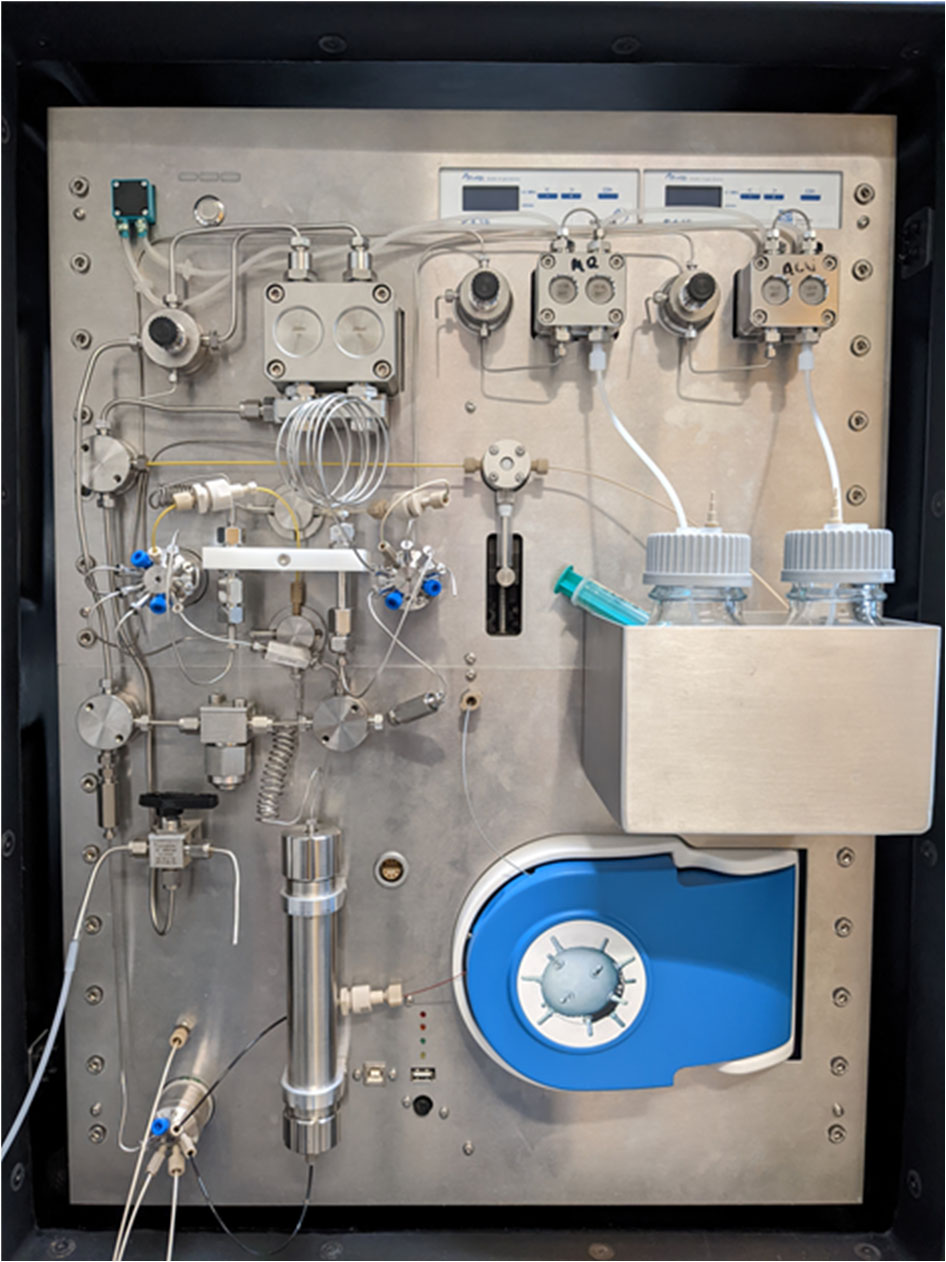
- Portable HPLC
- Portable mass spectrometry
- Preconcentration of explosives from seawater
- Outlook for the future
- GEOMAR "Xplotector" Lab-in-a-Box System
- Fraunhofer ICT electrochemical sensor
- System integration within MMinE-SwEEPER
- Conclusions
- References
D8.4 Electrochemical sensor
Electrochemical sensor advanced for integration in AUVs(Lead Partner: FHG-ICT)
D8.5 CWA analyses through NAA (Report available)
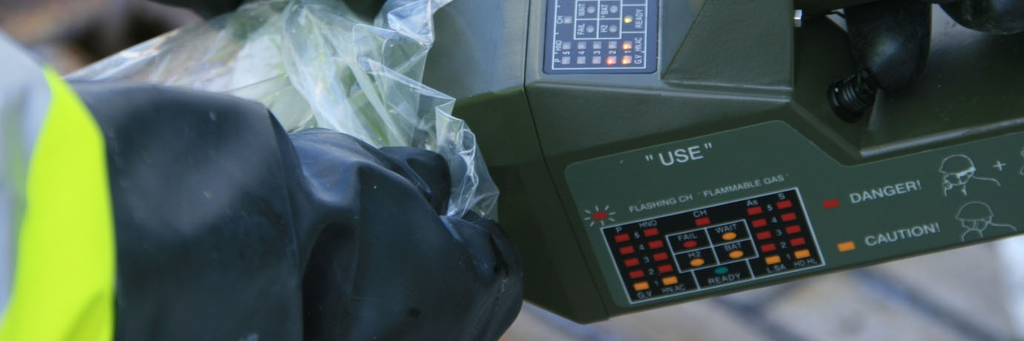
🗎Report on available technology for CWA analysis including NAA (Lead Partner: IOPAN)
Contents
- Introduction
- The environmental and security challenge of sea-dumped chemical warfare agents
- The EU context
- Operational and safety drivers for on-board CWA analysis
- On-board CWA analysis
- Hazmat-teams/CBRN-units
- Analysis of CWA with deployable headspace GC-MS
- Analysis of CWA by portable capillary electrophoresis
- Neutron Activation Analysis NAA
- Monte Carlo simulations
- Analysis details
- Simulation results
- Experimental results
- Monte Carlo simulations
- Conclusions
- References
D8.6 Advanced Xplotector
Xplotector system enable for shipboard CWA analysis(Lead Partner: GEOMAR)
D8.7 Report on corrosion
Report on optical and ultrasonic corrosion classes & measurements(Lead Partner: GEOMAR)
WP9: Assessment of munition remediation methods
D9.1 Onsite LOD and HOD (Report available)
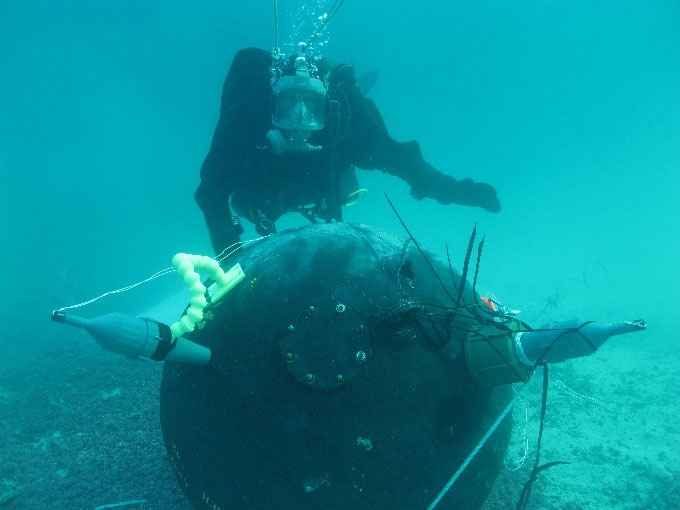
🗎Report of facts, impacts and costs of HOD and LOD (Lead Partner: FFI)
Contents
- Introduction
- Reactions of explosives
- High-order detonation (HOD)
- Low-order disposal (LOD)
- Comparing HOD and LOD
- Pressure wave
- Contamination
- Cost
- Other disposal methods
- Regulations and standards
- Conclusions and recommendations
- References
D9.2 Chem. cont. LOD and HOD
Simulation of chemical contamination during HOD(Lead Partner: FHG-ICT)
D9.3 Mitigation HOD
Overview of possible mitigation measures including field reports(Lead Partner: FHG-ICT)
D9.4 Effects of coverup methods
Report on munition cover-up possibilities, risks and costs(Lead Partner: FFI)
D9.5 Large amounts of munition
Large amounts of munition Summary of approaches to clear large amounts of munition(Lead Partner: FFI)
D9.6 Chemical dispersion
Model code for dispersion(Lead Partner: Cran-U)
D9.6 Chemical dispersion
Model code for dispersion(Lead Partner: Cran-U)
D9.7 Chemical contamination
Report of chemical contamination regarding BiP(Lead Partner: AU)
WP10: Tests, trials and demonstrator surveys
WP11: WP11: Integration of best practices and development of education material
D11.1 Report on Historical Data Analyses (Report available)
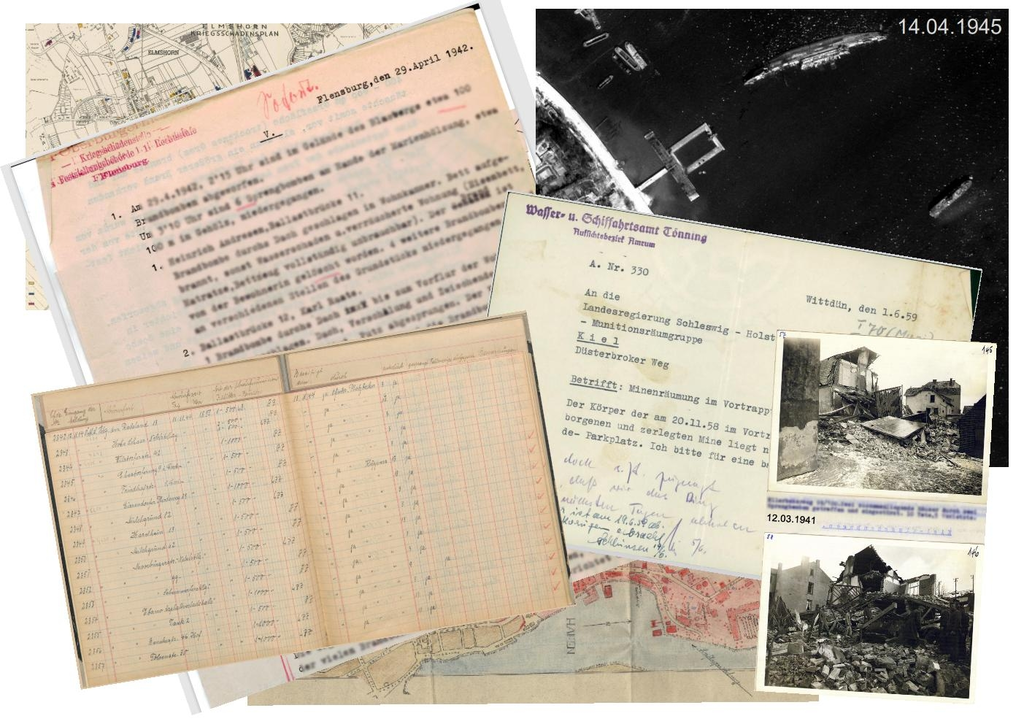
🗎Report on the evaluation and application of methodologies for handling historical data used for initial site screening and risk assessment (Lead Partner: KRD-SH)
Contents
- Introduction Historical Data
- Data Sources in Historical UXO Research
- Archival and Documentary Sources
- Aerial and War-Time Photographs
- Recovered Munitions Records
- Oral History and Local Knowledge
- Geological and Environmental Indicators
- Cross-Cutting Challenges in Historical Data Sources
- Example: Old scripts and handwriting
- Data Sources in Historical UXO Research
- Historical Data Compilation, Processing and Spatial Analysis
- Compiling and Data management
- Historical Data Processing and Validation
- GIS-based Spatial Integration
- KIS at the EOD Service in Schleswig-Holstein (KRD-SH)
- Output: Mapping of Suspected UXO Areas and Risk Assessment
- Automated Analysis of Historical Documents for the Identification of Dumped Munition and UXO in the Baltic and North Seas
- ErPaD: AI-based extraction of spatial positions from historical documents
- ErPaD 2.0: Transition from Research to Operational Large-Scale Deployment
- From Methodology to Product: Smart Geotagging within the ocean data platform TrueOcean
- Relevance for Marine Munition and UXO Management
- Conclusion
- References
- Appendix
D11.2 Detection and remediation
Compilation of munition detection and remediation techniques(Lead Partner: IOPAN)
D11.3 Environmental impact
Report with impact screening methods and tools(Lead Partner: AU)
WP12: Communication, knowledge transfer and capacity building
D12.1 Plan for diss. and exploitation (Report available)
🗎Plan for dissemination including guidelines and exploitation (Lead Partner: JPIO)
Contents
- Initial Remarks
- Introduction
- Definitions and Terminology
- Background
- Political commitments
- Stakeholder engagement
- External stakeholders
- Role of the External Stakeholder Advisory Board
- Target audience
- DEC tools and channels
- Project website
- JPI Oceans Munitions Portal
- Social media
- Newsletter
- Scientific publications and conference presentations
- Project flyers and information material
- Project video
- Field trials, cruises and demonstrations
- Media outreach
D12.2 Final science-policy event
Science-policy event in Brussels on project outcomes(Lead Partner: JPIO)
D12.3 Fully updated munition portal
Munition portal up to date(Lead Partner: JPIO)
D12.4 Munition portal legacy strategy
Strategic document on how to proceed beyond the project JPIO(Lead Partner: JPIO)
WP13: Project coordination & management
D13.2 Gender statistics
Statistics of gender balance in project, training conferences(Lead Partner: GEOMAR)
D13.3 Project Website
First version of project webpage(Lead Partner: GEOMAR)
D13.4 Project Report 1 (Report available)
🗎Project Report (Lead Partner: GEOMAR)
Contents
- Explanation of the work carried out and Overview of the progress
- Objectives
- Explanation of the work carried out per WP
- Impact
- Update of the plan for exploitation and dissemination of results
- Follow-up of recommendations and comments from previous review(s)
- Exploitation primarily in non-associated third countries
- Open science
- Deviations from Annex 1 and Annex 2
- Tasks/objectives
- Use of resources
- Annex: Compilation of Milestone Reports First Interim Reporting Period
D13.5 Project Report 2
Project Report(Lead Partner: GEOMAR)
D13.6 Project Report 3
Project Report(Lead Partner: GEOMAR)