On 29 May 2026, the MMinE-SwEEPER project hosted a webinar on historical data acquisition and processing in the context of underwater munitions and other hazardous objects at sea. The event highlighted how archival records, archaeological evidence, and historical reconstructions can support better identification, assessment, and future management of marine hazards.
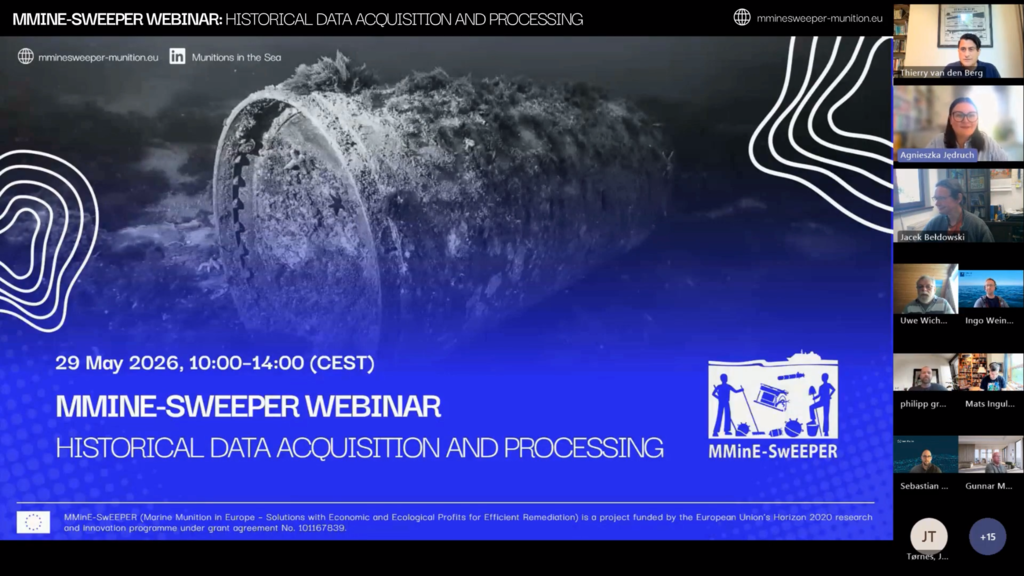
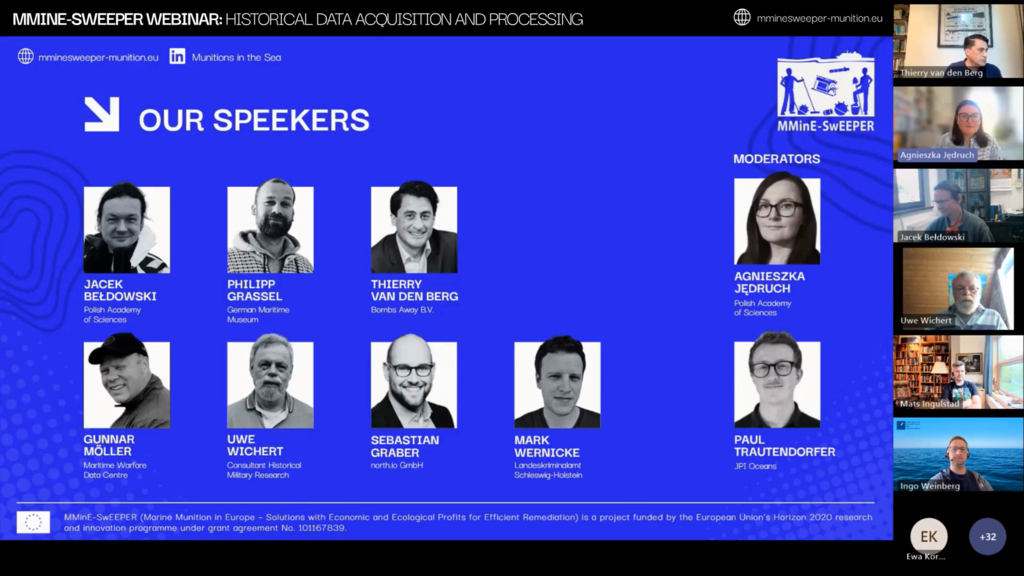
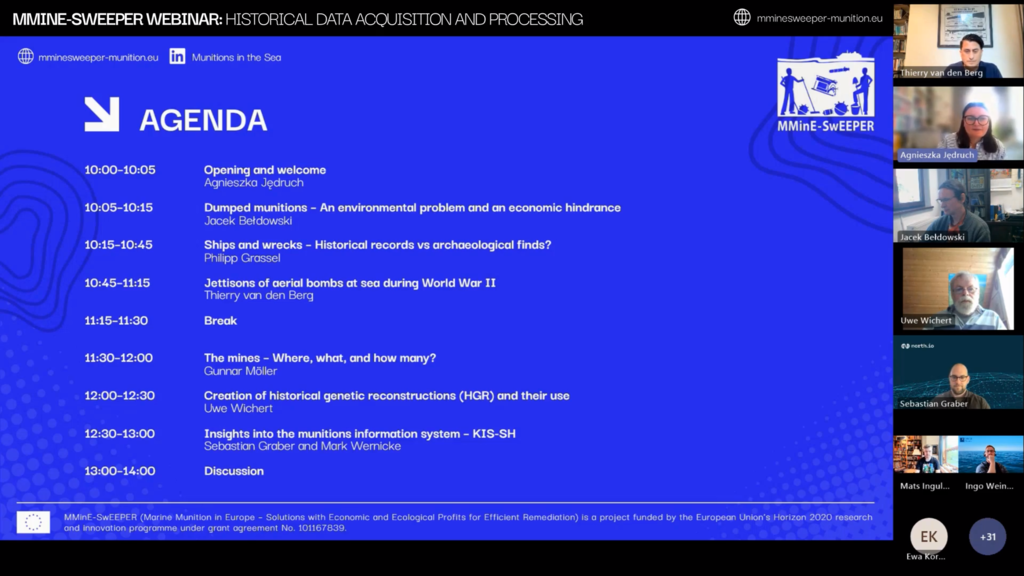
On 29 May 2026, MMinE-SwEEPER hosted the webinar "Historical Data Acquisition and Processing", bringing together experts working on underwater munitions, wrecks, and other hazardous objects at sea. The key message of the webinar was clear – historical data are not merely records of the past, but essential tools for understanding present-day marine risks and for planning safer and more effective management strategies for the future. The webinar was organised within Work Package 11: Integration of Best Practices and Development of Educational Material, led by the Institute of Oceanology of the Polish Academy of Sciences. The programme featured seven guest speakers – Jacek Bełdowski, Philipp Grassel, Thierry van den Berg, Gunnar Möller, Uwe Wichert, Sebastian Graber, and Mark Wernicke – reflecting the interdisciplinary and international character of the event. The webinar brought together more than 50 participants representing different sectors, from academia and practitioners to policymakers, and the lively discussion that followed underlined the importance of the topic and the need for continued exchange and collaboration. The webinar covered a wide range of topics, including historical documents, archaeological findings, aerial bomb jettisons during the Second World War, mine records, historical genetic reconstructions, and munitions information systems. Together, these examples demonstrated how combining different types of knowledge can improve our understanding of where hazardous objects may be located, what risks they pose, and how future actions can best be prioritised. This work is particularly important because many dangerous legacy objects remain hidden on the seafloor, where they may affect marine ecosystems, maritime activities, and coastal safety. Better use of historical information can support more accurate mapping, risk assessment, and remediation planning, while also helping to avoid costly mistakes and unnecessary interventions. The webinar highlighted the role of MMinE-SwEEPER in connecting research, data, and practical solutions across Europe. The next steps include continuing knowledge exchange, improving data integration, and strengthening cooperation between researchers, authorities, and other stakeholders involved in the management of underwater hazards.
You can watch a recording of this webinar on Youtube